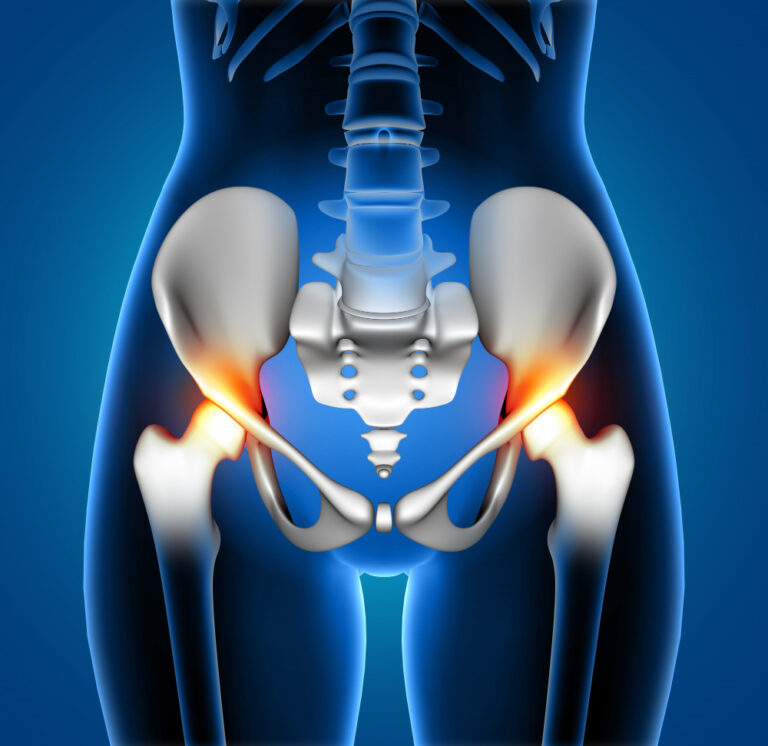
Hip Surgery
Hip surgery is a medical procedure performed to relieve pain, restore movement, and improve quality of life when the hip joint is damaged due to disease, injury, or wear and tear.
Common Reasons for Hip Surgery
- Osteoarthritis (wear-and-tear arthritis)
- Rheumatoid arthritis
- Hip fractures (especially in elderly patients)
- Avascular necrosis (loss of blood supply to the hip bone)
- Congenital hip disorders
- Severe hip pain and stiffness limiting daily activities
Types of Hip Surgery
Total Hip Replacement (THR)
Damaged hip joint is replaced with artificial components (implant).
Most common and highly successful procedure.
Partial Hip Replacement
Only the damaged part of the hip joint is replaced.
Often done in hip fracture cases.
Hip Resurfacing
Bone is preserved and capped with metal components.
Suitable for younger, active patients.
Minimally Invasive Hip Surgery
Smaller incisions, less pain, faster recovery.
Revision Hip Surgery
Replacement of a previously implanted hip joint.
Benefits of Hip Surgery
- Significant pain relief
- Improved mobility and joint function
- Better quality of life
- Ability to return to normal daily activities