
What Is Hip Replacement Surgery?
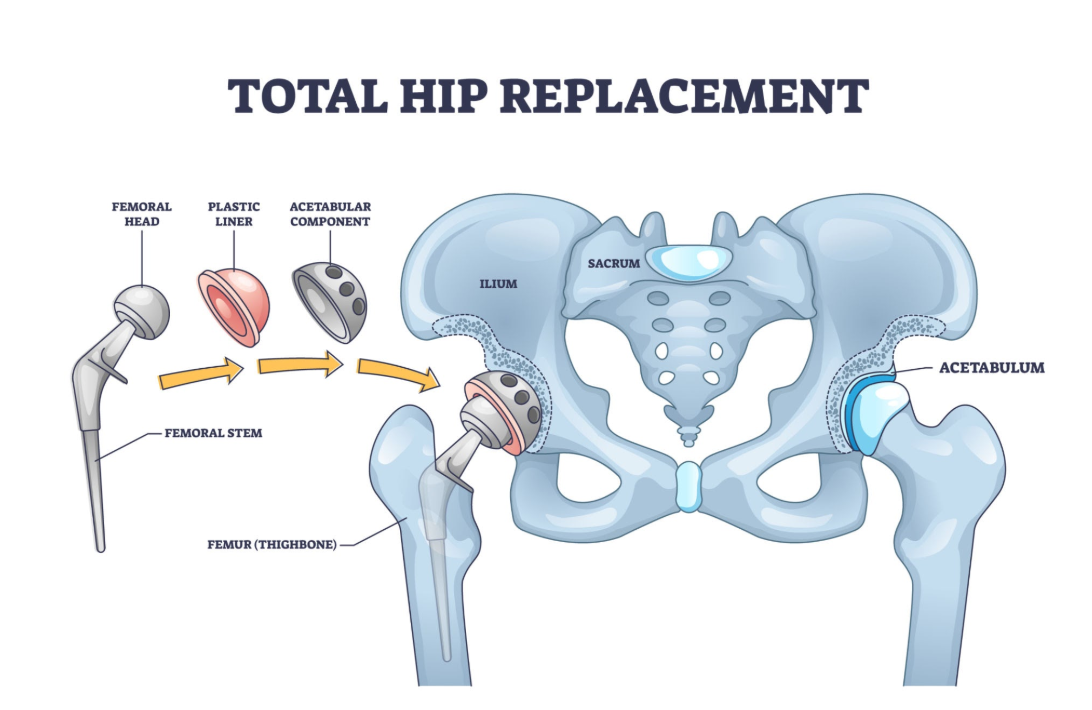
The hip is a ball-and-socket joint. The “ball” is the top of your thighbone (femoral head), and the “socket” is a cup-like portion of your pelvis (acetabulum).
During a total hip replacement, an orthopedic surgeon removes the damaged bone and cartilage from the joint and replaces them with prosthetic components made of durable metal, ceramic, or high-grade plastic:
Acetabular Component: A metal shell lined with durable plastic or ceramic fitted into the socket.
Femoral Stem: A metal stem inserted into the hollow center of the thighbone.
Femoral Head: A smooth metal or ceramic ball attached to the stem that fits seamlessly into the new socket.
Signs You Might Need Hip Replacement
Most people consider hip replacement when joint degradation begins to severely restrict their quality of life. Common indications include:
Severe, Chronic Pain: Pain in the hip, groin, or thigh that persists even while resting or sleeping.
Stiffness: Difficulty moving or lifting the leg, making walking or bending difficult.
Failed Conservative Care: Minimal or no relief from anti-inflammatory drugs, cortisone injections, or physical therapy.
Loss of Independence: Inability to perform routine tasks like getting out of a chair or walking short distances without assistance.